About Halibut Point
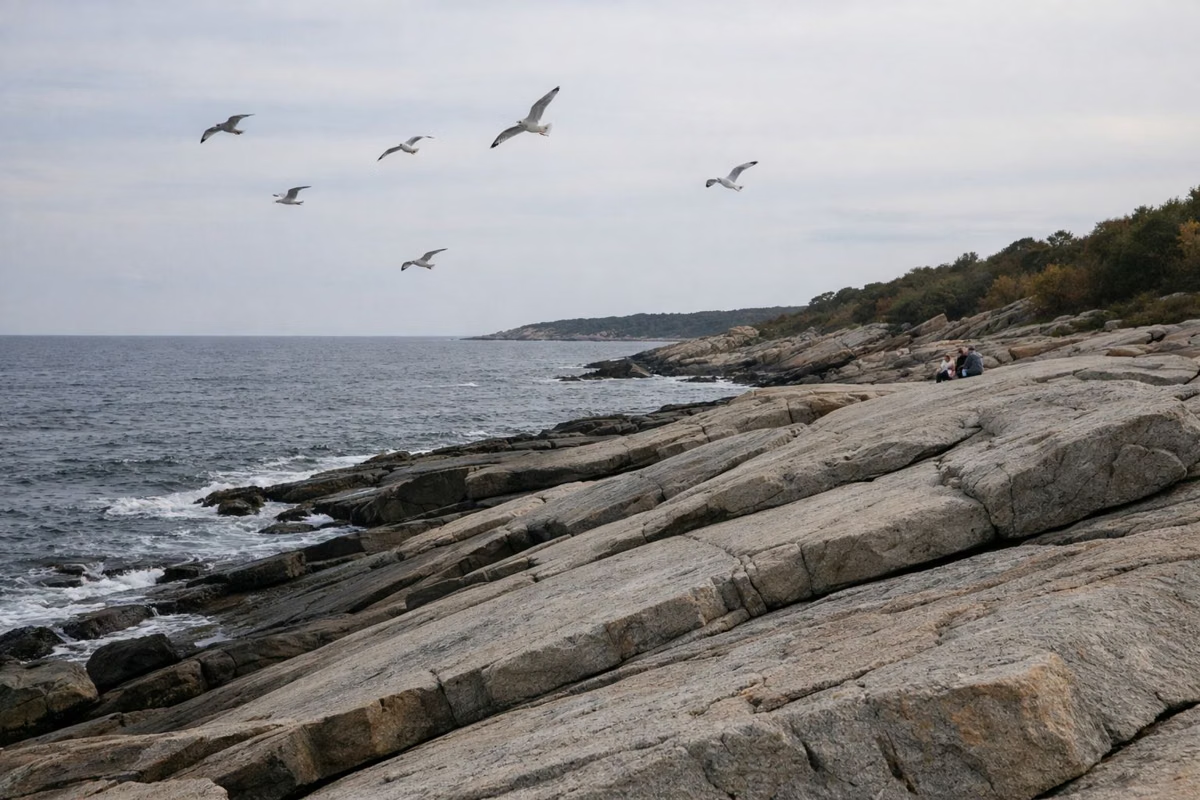
Halibut Point's history runs in three layers: about 450 million years of granite, roughly a century of quarrying that ended in 1929, and a World War II tower finished in 1944. DCR sums the place up as a granite edge between the Atlantic and the mainland where people quarried stone, built military structures to defend the nation, and where the park now supports a wide variety of wildlife.
Halibut Point at a Glance
Before the Quarry
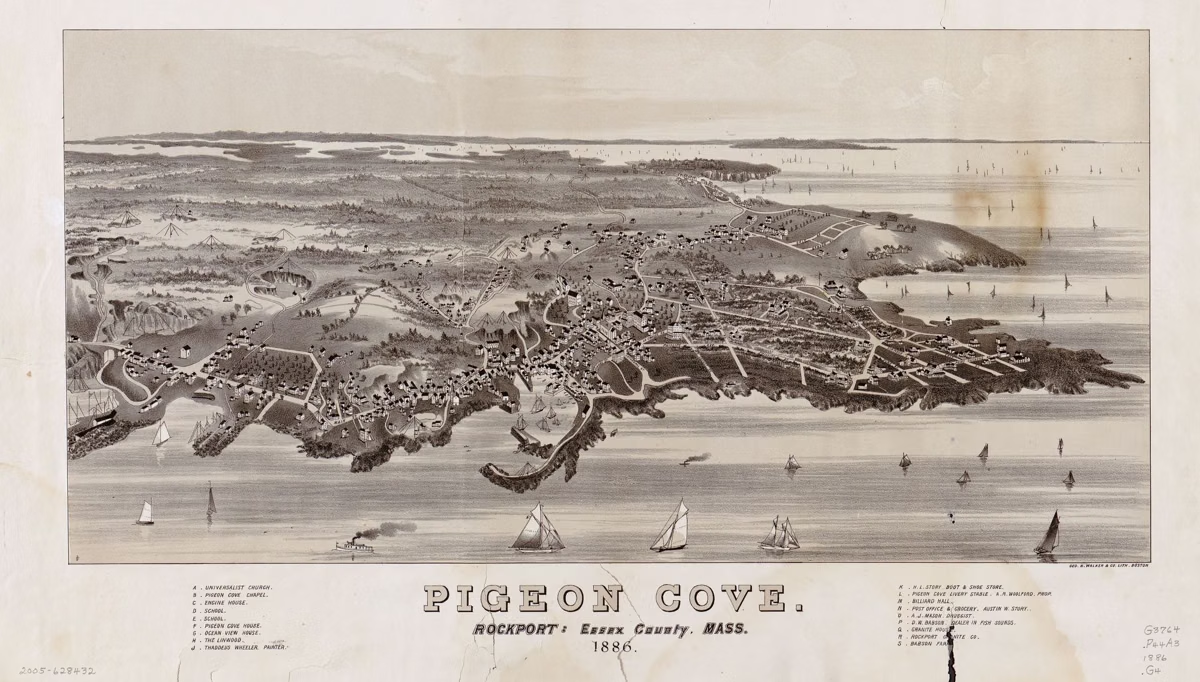
DCR's brochure says groups of Pawtucket people used this part of Cape Ann as a summer home long before colonial settlers arrived in the 1690s. Both lived by fishing, hunting and farming.
The Granite Century
Nobody cut Halibut Point's granite into blocks until the 1800s. Around the middle of that century local men opened a quarry here, and for nearly a hundred years it was a working site. Steam engines became available in the 1850s to power derricks, steam drills were invented in the 1880s, and by about 1910 four derricks were working the pit. The Rockport Granite Company bought a train engine, the Nella, in 1910 to haul granite from the quarry to the pier at Folly's Cove. The full story, stop by stop, is on the quarry page.
Stone from here went into the Sandy Bay Breakwater off Rockport, begun by the federal government in 1885 and halted in 1915. The Trustees say granite quarried at Halibut Point paved city streets and built bridges, tunnels, monuments and buildings such as Boston's Custom House Tower.
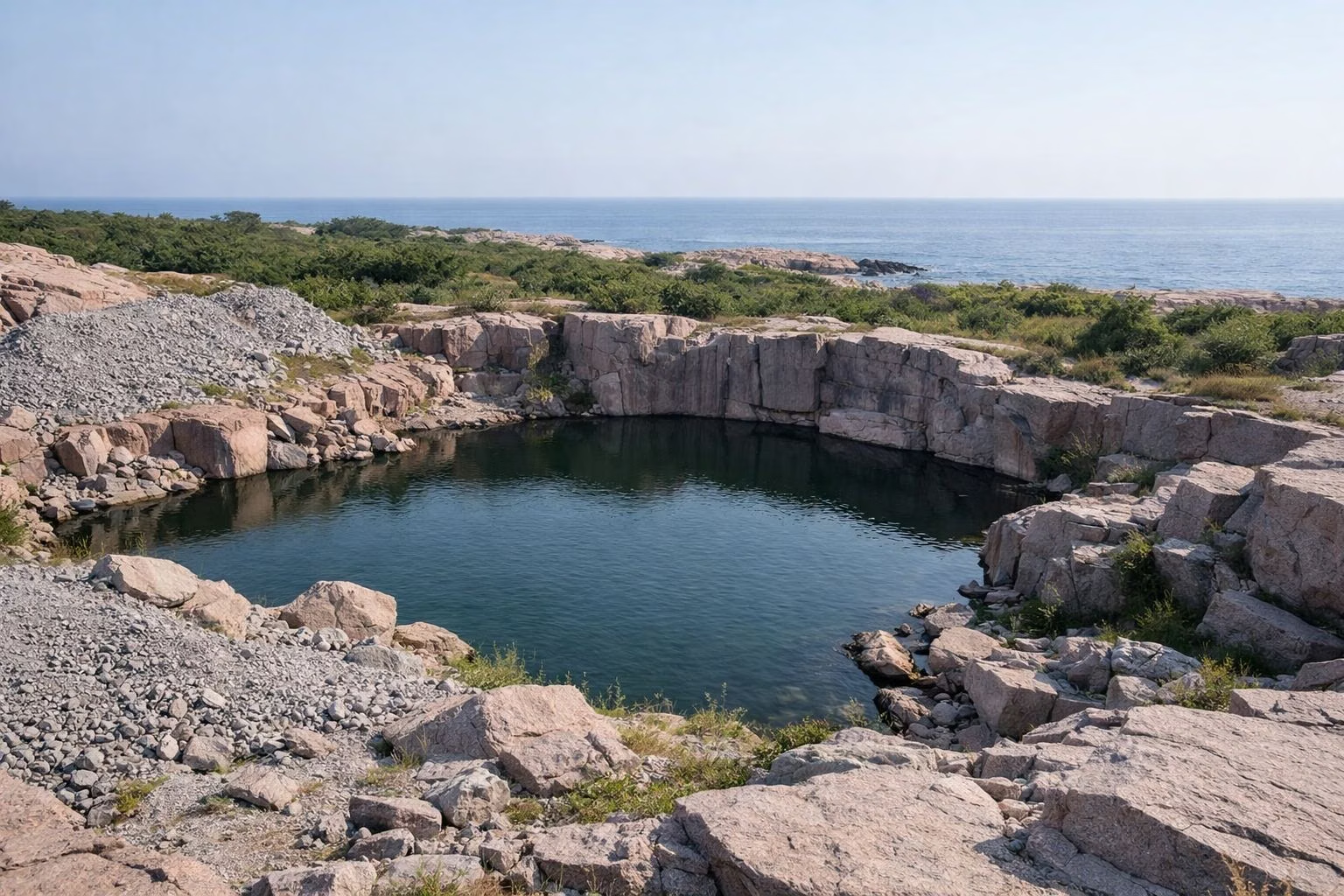
In 1929 the local granite industry collapsed, and the quarry was abandoned. Within a year the Rockport Granite Company was out of business. Steel buildings and concrete and asphalt roads meant the trade never came back. The pit filled with water, and in DCR's words, nature reclaimed the rugged landscape.
World War II
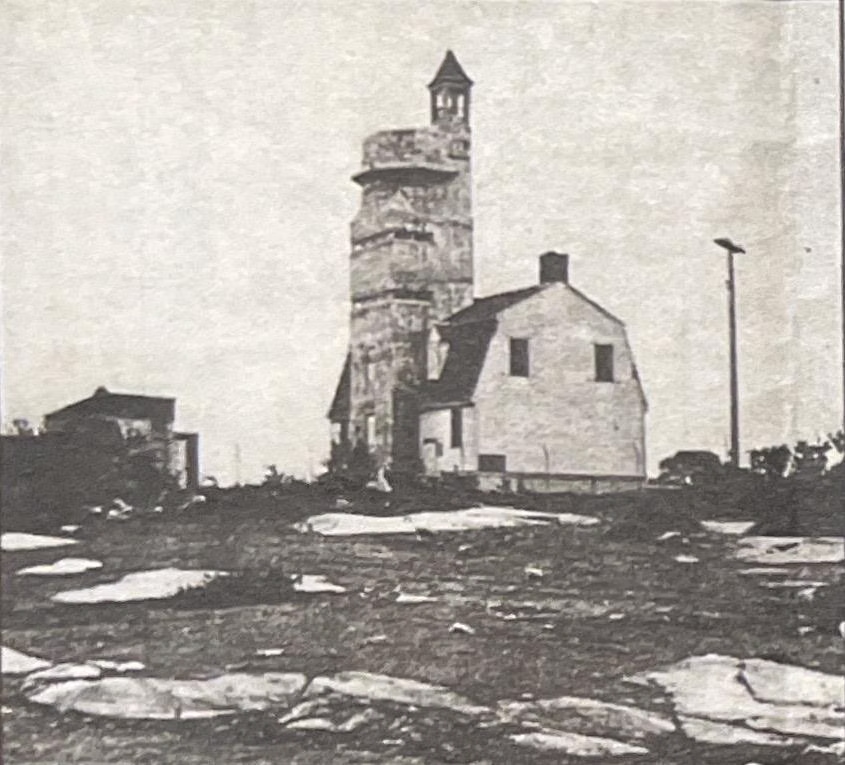
After Pearl Harbor the United States strengthened its coastal defenses with patrols and a chain of watch towers. Halibut Point's 60-foot fire-control tower was completed in 1944. The tower gave aiming information to the crews of the massive guns that protected Boston and Portsmouth from attack by sea. More on the tower page.
A Park on the Point
Today the land is shared. DCR runs Halibut Point State Park around the quarry and tower, and The Trustees run the 12-acre Halibut Point Reservation next door. The Friends of Halibut Point State Park formed in 1985 to support the park; DCR's brochure notes the group was once the Halibut Point Association. It has paid for exhibits, granite-splitting tools and extra maintenance.
DCR rehabilitated the visitor center and reworked the landscape: a rebuilt parking lot, an accessible entrance path, granite entry walls, new trees and a native meadow. Officials cut the ribbon and reopened the visitor center on November 30, 2021.
How the Renovation Happened
DCR held public meetings on the project in Rockport, at the library on October 29, 2018 and at the middle school on September 17, 2019. The 2019 meeting covered the completed visitor center rehabilitation and the exhibit and landscape plans. The landscape work was done in 2021. While the main entrance path was being rebuilt, DCR directed visitors to the Gaffield Road entrance.
According to DCR's brochure, the Friends group's volunteers staff the visitor center, conduct tours and provide hospitality at events.
Visiting Today
The park is open year-round. Start with parking, hours and plan your visit.
Historic Pictures